


Visitors to Spain’s Basque Country often encounter the region’s celebrated attractions: its gastronomy, festive events, its landscapes, its culture. Yet, beyond the lively promenades and architectural wonders lies a less-known but equally compelling story—that of the Jewish communities that once flourished here, leaving a lasting mark on the region’s culture and traditions. From the Middle Ages to the expulsions of the 15th century, Jewish heritage in the Basque Country remains etched into its landscapes and customs.
In the Basque Country, Jewish history is an integral thread that continues to surface throughout its vibrant cities and quiet towns. This heritage is especially noticeable in key destinations like Bilbao and San Sebastián, where scenic coastlines meet world-renowned culinary and cultural landmarks. Bilbao, home to the iconic Guggenheim Museum, designed by Jewish-Canadian architect Frank Gehry, and San Sebastián, with its famed bayfront promenade, stand as popular entry points to the region. However, in the heart of the Basque Country, the legacy of Jewish life reveals a compelling story that stretches back to the 13th century, enduring through the era of the Spanish Inquisition.
In the medieval period, Basque cities such as Vitoria-Gasteiz, Bilbao, Tolosa, and Hondarribia became havens for Jews seeking refuge from persecution in other parts of Spain. By the 14th century, Jewish populations were establishing communities in northern Spain and nearby France to escape the violence of the Spanish Inquisition.
Vitoria-Gasteiz, now the capital of the Basque Autonomous Community, became home to a thriving Jewish population with a strong political influence. It was mainly composed of skilled tradesmen, farmers, physicians, and tax collectors, who significantly contributed to Vitoria’s development and economy.
Although it is difficult to know the exact number of Jews who lived there, records indicate that in the 13th century there were about 2,000 Jews in a population of 10,000, and about 900 at the time of the expulsion in 1492. In a document dated in Huete in September of 1290, it is possible to verify these numbers in the repartimiento made by mandate of the king Don Sancho the Brave, where he orders to all the aljamas of the kingdom to pay to the one of Vitoria eight thousand five hundred and twenty and one maravedies.
 The town of Vitoria-Gasteiz, the Basque Autonomous Community’s capital, presents perhaps the clearest footprint of Jewish life in northern Spain. This historic city, located 60 kilometers southeast of Bilbao, had one of the most significant Jewish populations in the region, peaking at 900 residents on the eve of the 1492 expulsion. Known for their roles as physicians, farmers, and tradespeople, Jewish residents were both integral to the local economy and isolated within a distinct ghetto along what is now Nueva Dentro Street. This thoroughfare, once named Jewry Street, was accessible only through a single gated entrance.
Today, the Jewish cemetery, now known as Judizmendi (Jews’ Mountain) Park, serves as a major memorial to this community. A granite monument, authorized in 1492 by Vitoria’s town council, commemorates an agreement with the town’s Jews to respect and preserve their burial site, a pact honored until 1952 when the Jewish community in Bayonne, France, authorized its transformation into a public park. Judizmendi stands as a solemn reminder of Vitoria’s Jewish heritage.
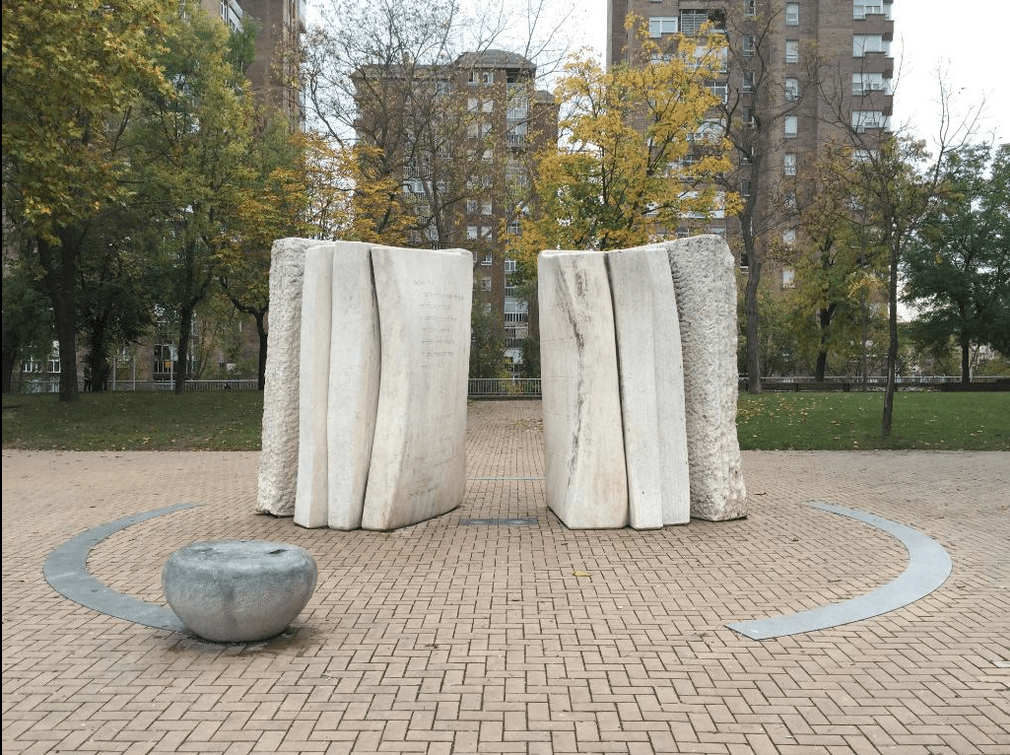 Standing in Judizmendi is a 2004 monument titled “Coexistence”, crafted by Israeli artist Yael Artsi. Composed of eight large concrete slabs that resemble the pages of an open book, the sculpture is inscribed in Basque, Spanish, and Hebrew with Isaiah’s call to “beat swords into plowshares.” The message of peace and shared understanding resonates throughout the Basque Country, echoing the region’s complex history with a timeless reminder of resilience.
Traces of Jewish Heritage in Other Basque Towns
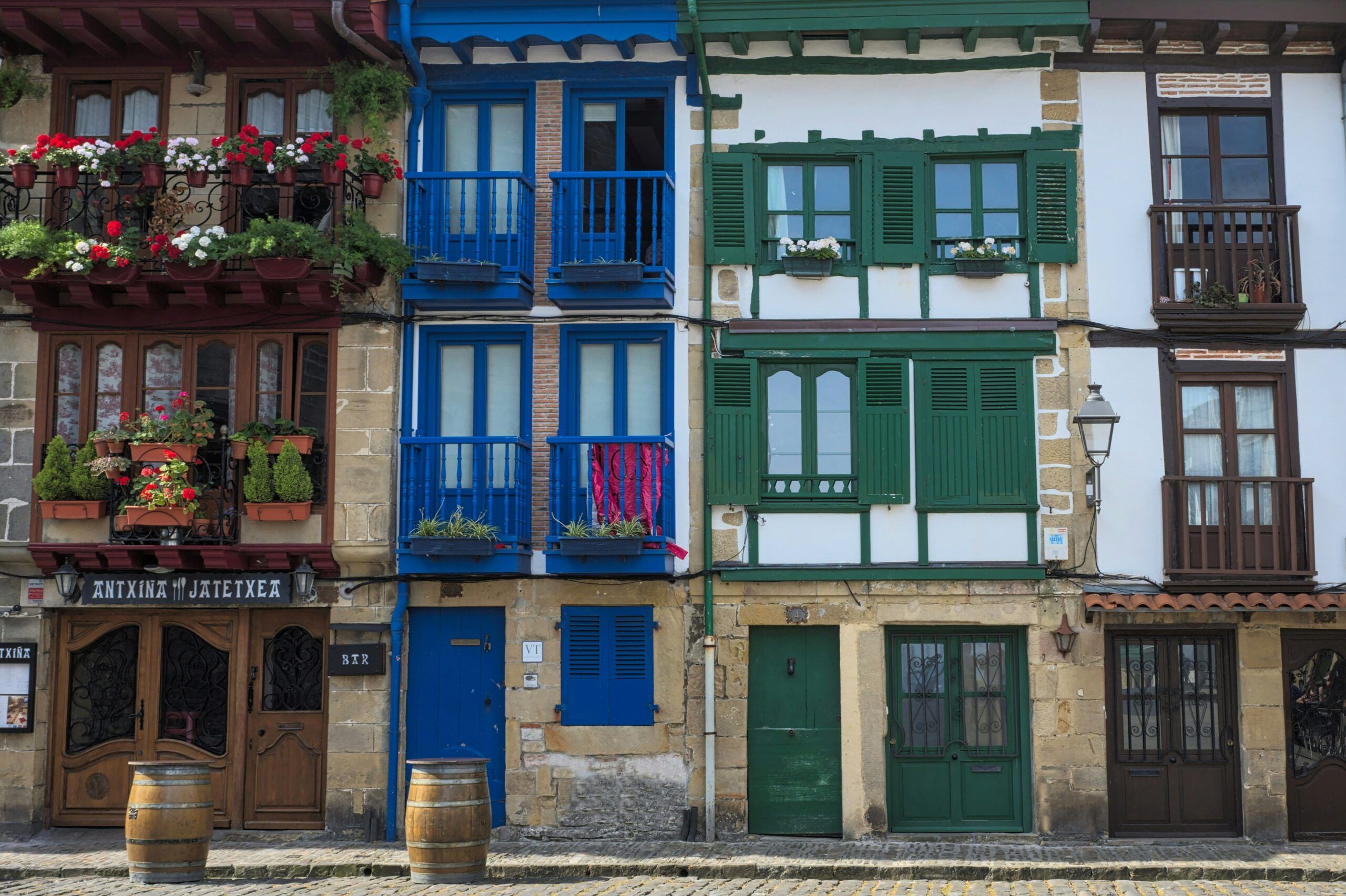
Beyond Vitoria, other Basque towns carry traces of Jewish heritage that predate the expulsion. Hondarribia, a coastal town known for its medieval architecture, was home to a Jewish community whose presence is still perceptible in its historic center. Tolosa and the old town of Bilbao also retain evidence of Jewish quarters from the Middle Ages, each offering unique glimpses into Jewish life in a diverse and evolving Basque society.
 Jewish quarters in the Basque Country offer both an architectural and cultural journey into the past. With narrow cobbled streets and adobe houses, these neighborhoods embody a distinctive style that adds depth to the region’s medieval roots. Exploring these streets is a passage back in time, where synagogues, old homes, and remnants of ancient marketplaces showcase the community’s long-standing presence and resilience.
Best Times to Visit
The best time to visit the Basque Country falls between May and October, when temperatures are mild, typically ranging from 60°F to 77°F. During this period, travelers can enjoy the area’s scenic coastlines, lush green mountains, and cultural events, including the world-famous San Sebastián International Film Festival in September. For those wishing to explore the historical Jewish quarters, spring and early autumn offer pleasant weather for walking tours and visits to heritage sites, with fewer crowds than the peak summer months.
For travelers from the United States, flights to Bilbao are accessible with layovers from several major cities, including New York, Los Angeles, and Chicago. Airlines such as Delta, Iberia, and American Airlines offer regular flights with one or two stops, typically through Madrid, Barcelona, or other European hubs. Alternatively, flying into Madrid or Barcelona and taking a domestic flight or scenic train ride north offers a chance to see more of Spain’s diverse landscapes.